 Opals
Opals
 Gemstones
 Jewelry
 Coins
Coins


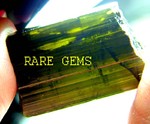
140.35 cts A Rare Indonesian Fossil Bamboo RG-7770 Raregems
- SKU
- RG-7770
- Afmetingen (mm)
- 87.5 x 21.5 x 14mm
- Gewicht (cts)
- 140.35
- Treatment
- No Treatment
- Shape
- Freeform
- Type
- Specimen
- Kleuren
-
RARE INDONESIAN FOSSIL BAMBOO
BEAUTIFUL RICH ORANGE BROWN AND BEIGE COLOURS
BOTRYOIDAL TEXTURE
TREATMENT: NONE
CAN BE SLICED AND POLISHED TO MAKE BEAUTIFUL JEWELRY STONES
RECENTLY FOUND BY GEOLOGISTS IN INDONESIA, THIS "FOSSIL BAMBOO" IS A TRIBUTE TO NATURES BEAUTY.
THE SHAPES ARE ATTRIBUTED TO A LOCAL INDONESIAN BAMBOO CALLED "AWI" OR JAPANESE STUMPY BAMBOO.
The basal masses consist of hollow tubes several centimeters in diameter with a consistent striated inner wall structure, suggesting that the agate formed around something organic, which subsequently decomposed away. The fingers vary in size and thickness
Colors vary from blue, purple, and pink to orange, red, yellow and white. Colorful patterns such as orbs, bands, streaks and dendrites are common but often restricted to specific layers of the agate.
Bamboo has strong silica rich stems. When a volcano erupts, a deluge of siliceous volcanic ash falls into a marsh or on a hillside and later is washed into a wetland. The ash will undergo weathering oxidation, releasing abundant silica, iron, manganese and other ions into the water. Water chemistry becomes acidic and colloidal suspension of clays from the decomposing feldspars increases.
The tough stems of these marsh plants can become the nucleus for deposition of botryoidal crystallization of cryptocrystalline quartz (agate). Rains and dry weather cause the marsh waters to rise and fall and the acidity to vary. Repeated eruptions and ash deposition can result in layer upon layer of agate crystallization around the stems and other marsh bottom debris.
Subsequent death and decay of the plants occurs over the years. Some of the stems remain standing while others may bend. Some stems may break and fall to the marsh floor. Stems are left hollow as the organic components of the plants decompose. Suspended iron and manganese, clays and other elements become deposited in the hollow cores in a combination of “bog iron” residue which over time alters to become an infill of siderite surrounded by the cast of concentric rings of agate which Indonesians now call “Fossil Bambu”.
TRADING AS TRUEBLUEOPALS PTY LTD / LIGHTNINGOPALS LLC
| Verzend provider | Verzending naar Australië | Verzending naar de rest van de wereld | Gecombineerde verzending ( Australië ) | Gecombineerde verzending (rest van de wereld) |
|---|---|---|---|---|
| Standard Shipping - Tracked |
|
|
|
|
| FedEx |
|
|
|
|
| DHL |
|
|
|
|
- SKU
- RG-7770
- Afmetingen (mm)
- 87.5 x 21.5 x 14 mm
- Gewicht (cts)
- 140.35
- Treatment
- No Treatment
- Shape
- Freeform
- Type
- Specimen
- Kleuren
-
RARE INDONESIAN FOSSIL BAMBOO
BEAUTIFUL RICH ORANGE BROWN AND BEIGE COLOURS
BOTRYOIDAL TEXTURE
TREATMENT: NONE
CAN BE SLICED AND POLISHED TO MAKE BEAUTIFUL JEWELRY STONES
RECENTLY FOUND BY GEOLOGISTS IN INDONESIA, THIS "FOSSIL BAMBOO" IS A TRIBUTE TO NATURES BEAUTY.
THE SHAPES ARE ATTRIBUTED TO A LOCAL INDONESIAN BAMBOO CALLED "AWI" OR JAPANESE STUMPY BAMBOO.
The basal masses consist of hollow tubes several centimeters in diameter with a consistent striated inner wall structure, suggesting that the agate formed around something organic, which subsequently decomposed away. The fingers vary in size and thickness
Colors vary from blue, purple, and pink to orange, red, yellow and white. Colorful patterns such as orbs, bands, streaks and dendrites are common but often restricted to specific layers of the agate.
Bamboo has strong silica rich stems. When a volcano erupts, a deluge of siliceous volcanic ash falls into a marsh or on a hillside and later is washed into a wetland. The ash will undergo weathering oxidation, releasing abundant silica, iron, manganese and other ions into the water. Water chemistry becomes acidic and colloidal suspension of clays from the decomposing feldspars increases.
The tough stems of these marsh plants can become the nucleus for deposition of botryoidal crystallization of cryptocrystalline quartz (agate). Rains and dry weather cause the marsh waters to rise and fall and the acidity to vary. Repeated eruptions and ash deposition can result in layer upon layer of agate crystallization around the stems and other marsh bottom debris.
Subsequent death and decay of the plants occurs over the years. Some of the stems remain standing while others may bend. Some stems may break and fall to the marsh floor. Stems are left hollow as the organic components of the plants decompose. Suspended iron and manganese, clays and other elements become deposited in the hollow cores in a combination of “bog iron” residue which over time alters to become an infill of siderite surrounded by the cast of concentric rings of agate which Indonesians now call “Fossil Bambu”.
TRADING AS TRUEBLUEOPALS PTY LTD / LIGHTNINGOPALS LLC
| Verzend provider | Verzending naar Australië | Verzending naar de rest van de wereld | Gecombineerde verzending ( Australië ) | Gecombineerde verzending (rest van de wereld) |
|---|---|---|---|---|
| Standard Shipping - Tracked |
|
|
|
|
| FedEx |
|
|
|
|
| DHL |
|
|
|
|
-
 Positief
Parcel arrived exactly as described. Couldn't be more pleased

-
Positief
Great specimen. Good size & colour Best Thumbnail I've seen in 35 years of collecting Can you provide details regarding location of find?

-
Positief
Happy with purchase, arrived today. Thank you

-
Positief
Happy with purchase, arrived today. Thank you

-
Positief
Happy with purchase , arrived today. Thank you

