 Opals
Opals
 Gemstones
 Jewelry
 Coins
Coins


Deze kortingsbon is alleen geldig voor aankopen via 'Nu kopen'.
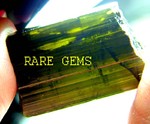
8.90 CTS ALEXANDRITE ROUGH PARCEL RG-5285
- SKU
- Afmetingen (mm)
- 8 x 7 x 3mm
- Gewicht (cts)
- 8.9
- Treatment
- No Treatment
- Kleuren
-
ALEXANDRITE ROUGH PARCEL colour change
TANZANIA-MANGHOLA DUMAWANGA DISTRICT ARUSHA REGION
NICE GREEN CHANGES TO PURPLE/RED
IDEAL FOR CABBING
TREATMENT-NONE
This rare gemstone is named after the Russian tsar Alexander II (1818-1881), the very first crystals having been discovered in April 1834 in the emerald mines near the River in the Urals. The discovery was made on the day the future tsar came of age. Although alexandrite is a relatively young gemstone, it certainly has a noble history. Since it shows both red and green, the principal colours of old Imperial Russia, it inevitably became the national stone of tsarist Russia.
Alexandrite is very scarce: this is due to its chemical composition. It is basically a chrysoberyl, a mineral consisting of colourless or yellow transparent chrysoberyl, chrysoberyl cat’s eye and colour-changing alexandrite (also in cat’s eye varieties). It differs from other chrysoberyls in that it not only contains iron and titanium, but also chromium as a major impurity. And it is this very element which accounts for the spectacular colour change. Rarely, vanadium may also play a part. According to CIBJO nomenclature, only chrysoberyls displaying a distinct change of colour may be termed alexandrite.
| Aanbieder | Bestemming | Kosten |
|---|---|---|
| DHL Standaard |
Rest van de wereld
14
|
eerste item
per extra item
verzendkosten gemaximeerd op
|
| FedEx |
Rest van de wereld
7
|
eerste item
per extra item
verzendkosten gemaximeerd op
|
| Standard Shipping - Tracked |
Rest van de wereld
14
|
eerste item
per extra item
verzendkosten gemaximeerd op
|
| Standard Shipping - Tracked Standaard |
Australië
7
|
eerste item
per extra item
verzendkosten gemaximeerd op
|
| DHL Standaard |
Verenigde Staten van Amerika
14
|
eerste item
per extra item
verzendkosten gemaximeerd op
|
| Express Shipping |
Australië
5
|
eerste item
per extra item
verzendkosten gemaximeerd op
|
| FedEx |
Verenigde Staten van Amerika
7
|
eerste item
per extra item
verzendkosten gemaximeerd op
|
| Standard Shipping - Tracked |
Verenigde Staten van Amerika
14
|
eerste item
per extra item
verzendkosten gemaximeerd op
|
- SKU
- Afmetingen (mm)
- 8 x 7 x 3 mm
- Gewicht (cts)
- 8.9
- Treatment
- No Treatment
- Kleuren
-
ALEXANDRITE ROUGH PARCEL colour change
TANZANIA-MANGHOLA DUMAWANGA DISTRICT ARUSHA REGION
NICE GREEN CHANGES TO PURPLE/RED
IDEAL FOR CABBING
TREATMENT-NONE
This rare gemstone is named after the Russian tsar Alexander II (1818-1881), the very first crystals having been discovered in April 1834 in the emerald mines near the River in the Urals. The discovery was made on the day the future tsar came of age. Although alexandrite is a relatively young gemstone, it certainly has a noble history. Since it shows both red and green, the principal colours of old Imperial Russia, it inevitably became the national stone of tsarist Russia.
Alexandrite is very scarce: this is due to its chemical composition. It is basically a chrysoberyl, a mineral consisting of colourless or yellow transparent chrysoberyl, chrysoberyl cat’s eye and colour-changing alexandrite (also in cat’s eye varieties). It differs from other chrysoberyls in that it not only contains iron and titanium, but also chromium as a major impurity. And it is this very element which accounts for the spectacular colour change. Rarely, vanadium may also play a part. According to CIBJO nomenclature, only chrysoberyls displaying a distinct change of colour may be termed alexandrite.
| Aanbieder | Bestemming | Kosten |
|---|---|---|
| DHL Standaard |
Rest van de wereld
14
|
eerste item
per extra item
verzendkosten gemaximeerd op
|
| FedEx |
Rest van de wereld
7
|
eerste item
per extra item
verzendkosten gemaximeerd op
|
| Standard Shipping - Tracked |
Rest van de wereld
14
|
eerste item
per extra item
verzendkosten gemaximeerd op
|
| Standard Shipping - Tracked Standaard |
Australië
7
|
eerste item
per extra item
verzendkosten gemaximeerd op
|
| DHL Standaard |
Verenigde Staten van Amerika
14
|
eerste item
per extra item
verzendkosten gemaximeerd op
|
| Express Shipping |
Australië
5
|
eerste item
per extra item
verzendkosten gemaximeerd op
|
| FedEx |
Verenigde Staten van Amerika
7
|
eerste item
per extra item
verzendkosten gemaximeerd op
|
| Standard Shipping - Tracked |
Verenigde Staten van Amerika
14
|
eerste item
per extra item
verzendkosten gemaximeerd op
|
-
Positief
Great set of Garnets and some really cool reds when put under a bright light! Fast delivery!! Many thanks


-
 Positief
Very fast shipping, arrived 11 days early. I think it will make a fantastic stone

-
Positief
good seller nice packaging photos accurate of mineral

-
Positief
good as shown in picture

Deze kortingsbon is alleen geldig voor aankopen via 'Nu kopen'.
