 Opals
Opals
 Gemstones
 Jewelry
 Coins
Coins


Vous n'avez pas enchéri sur cette enchère.
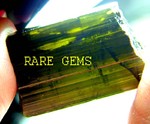
15.80 CTS AQUAMARINE ROUGH RG-1149 Raregems
- UGS
- RG-1149
- Dimensions (mm)
- 23 x 8 x 6mm
- Poids (cts)
- 15.8
- Treatment
- No Treatment
- Shape
- Freeform
- Type
- Rough
- Couleurs
-
AQUA MARINE ROUGH
LIGHT BLUE COLOUR.
BEAUTIFUL CRYSTAL FROM BRAZIL
COMPELTELYNATURALCOLOR
TREATMENT-NO TREATMENT OR ENHANCEMENT
Aquamarine (from Latin: aqua marina, “water of the sea”) is a blue or turquoise variety of beryl. It occurs at most localities which yield ordinary beryl, some of the finest coming from Russia. The gem-gravel placer deposits of Sri Lanka contain aquamarine. Clear yellow beryl, such as that occurring in Brazil, is sometimes called aquamarine chrysolite. When corundum presents the bluish tint of typical aquamarine, it is often termed Oriental aquamarine. The deep blue version of aquamarine is called maxixe. Its color fades to white when exposed to sunlight or is subjected to heat treatment, though the color returns with irradiation.
The pale blue color of aquamarine is attributed to Fe2 . The Fe3 ions produce golden-yellow color, and when both Fe2 and Fe3 are present, the color is a darker blue as in maxixe. Decoloration of maxixe by light or heat thus may be due to the charge transfer Fe3 and Fe2 . Dark-blue maxixe color can be produced in green, pink or yellow beryl by irradiating it with high-energy particles (gamma rays, neutrons or even X-rays) [10]
| Fournisseur d'expédition | Expédition vers Australie | Expédition dans le reste du monde | Expédition combinée ( Australie ) | Expédition combinée (reste du monde) |
|---|---|---|---|---|
| Standard Shipping - Tracked |
|
|
|
|
| FedEx |
|
|
|
|
| DHL |
|
|
Pas disponible |
|
- UGS
- RG-1149
- Dimensions (mm)
- 23 x 8 x 6 mm
- Poids (cts)
- 15.8
- Treatment
- No Treatment
- Shape
- Freeform
- Type
- Rough
- Couleurs
-
AQUA MARINE ROUGH
LIGHT BLUE COLOUR.
BEAUTIFUL CRYSTAL FROM BRAZIL
COMPELTELYNATURALCOLOR
TREATMENT-NO TREATMENT OR ENHANCEMENT
Aquamarine (from Latin: aqua marina, “water of the sea”) is a blue or turquoise variety of beryl. It occurs at most localities which yield ordinary beryl, some of the finest coming from Russia. The gem-gravel placer deposits of Sri Lanka contain aquamarine. Clear yellow beryl, such as that occurring in Brazil, is sometimes called aquamarine chrysolite. When corundum presents the bluish tint of typical aquamarine, it is often termed Oriental aquamarine. The deep blue version of aquamarine is called maxixe. Its color fades to white when exposed to sunlight or is subjected to heat treatment, though the color returns with irradiation.
The pale blue color of aquamarine is attributed to Fe2 . The Fe3 ions produce golden-yellow color, and when both Fe2 and Fe3 are present, the color is a darker blue as in maxixe. Decoloration of maxixe by light or heat thus may be due to the charge transfer Fe3 and Fe2 . Dark-blue maxixe color can be produced in green, pink or yellow beryl by irradiating it with high-energy particles (gamma rays, neutrons or even X-rays) [10]
| Fournisseur d'expédition | Expédition vers Australie | Expédition dans le reste du monde | Expédition combinée ( Australie ) | Expédition combinée (reste du monde) |
|---|---|---|---|---|
| Standard Shipping - Tracked |
|
|
|
|
| FedEx |
|
|
|
|
| DHL |
|
|
Pas disponible |
|
-
 Positif
Paid and shipped - no feedback left after 100 days

-
Positif
Happy with purchase, arrived today. Thank you

-
Positif
Happy with purchase, arrived today. Thank you

-
Positif
Happy with purchase , arrived today. Thank you

-
Positif
Many thanks.


Pourquoi les utilisateurs se surenchérissent-ils ?
Lorsqu'une enchère est placée, il s'agit du montant maximum qu'une personne est prête à enchérir pour le produit. Notre système enchérira alors automatiquement au nom de l'enchérisseur, augmentant progressivement l'enchère jusqu'au maximum pour maintenir sa position de meilleur enchérisseur.
Lorsqu'une icône indiquant « Enchère automatique » apparaît, cela signifie que notre système place activement des enchères pour l'enchérisseur en fonction de son enchère maximale. Cela peut donner l'impression que les enchérisseurs se surenchérissent, mais c'est simplement le résultat de la mise à jour de l'enchère par le système pour refléter la limite maximale des enchérisseurs.
